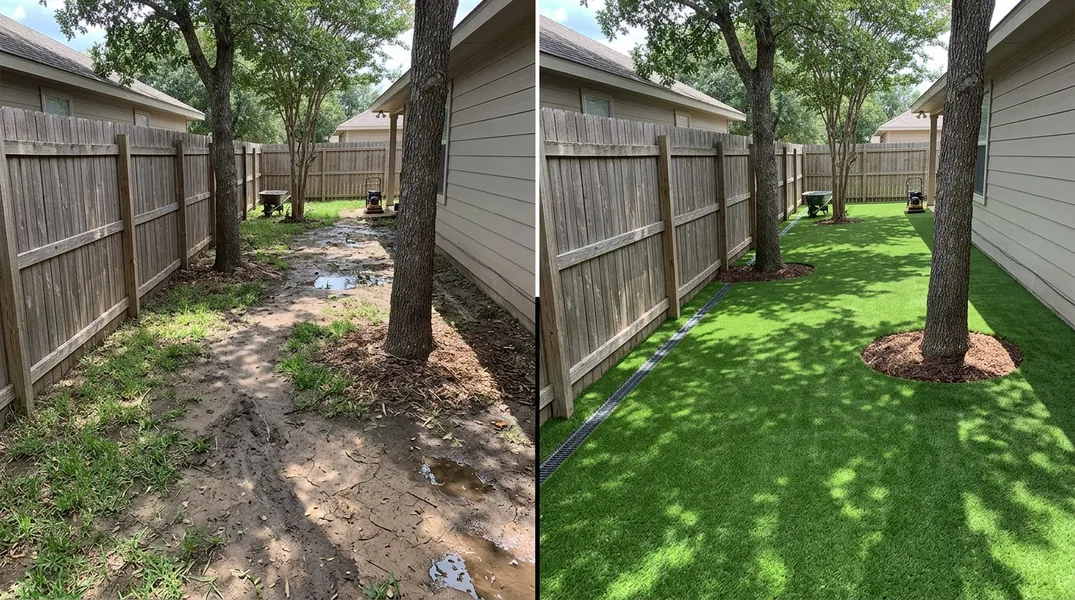
Why College Station Homeowners Are Switching from Real Grass to Artificial Turf
If you've spent a spring season watching your lawn struggle in College Station's heavy clay soil, you're not alone. Real grass battles a perfect storm of challenges here: intense summer heat, unpredictable spring storms that turn yards into mud pits, and shade from mature oak trees that thrive in our region. Homeowners are increasingly asking themselves whether the endless cycle of watering, fertilizing, aerating, and reseeding is worth the effort.
The comparison between turf vs artificial grass isn't just about aesthetics anymore. It's about practicality, time, and money. Modern artificial grass has evolved dramatically from the plastic-looking turf of decades past. Today's synthetic lawns look remarkably natural, feel soft underfoot, and require a fraction of the maintenance. For busy professionals, families with young children, and anyone tired of fighting Mother Nature, artificial turf represents a genuine alternative worth serious consideration.
Understanding College Station's Unique Lawn Challenges: Clay Soil, Shade, and Spring Storms
College Station sits in an area dominated by clay-heavy soil that presents unique challenges for traditional lawn care. Clay compacts easily, drains poorly, and becomes rock-hard during dry spells while turning into a muddy mess after heavy rain. Our region experiences significant spring storms, and when those downpours arrive, real grass struggles to recover quickly. The soil stays saturated for days, creating conditions where grass roots rot and bare patches emerge. Meanwhile, the mature trees that make our neighborhoods beautiful cast substantial shade, and many popular grass varieties simply won't thrive in those shadowy spots.
Bermuda grass, the traditional choice for Texas lawns, performs reasonably well in full sun but requires consistent care and struggles with shade. It goes dormant and turns brown in winter, leaving your yard looking bare for months. The artificial grass vs real grass debate becomes particularly compelling when you factor in these environmental realities. Artificial turf doesn't care about soil composition, handles standing water without damage, and thrives in shaded areas where real grass would thin out and die. It maintains its appearance year-round, regardless of season or weather patterns.
Artificial Grass vs Real Grass: Maintenance Reality Check
The maintenance gap between artificial turf and real grass is staggering. A real lawn demands regular mowing, typically weekly during the growing season. You'll need to water consistently, especially during College Station's hot summers. Add in fertilizing schedules, weed control, aeration, dethatching, and pest management, and you're looking at dozens of hours annually. Many homeowners spend hundreds of dollars per year on lawn care services just to maintain a decent-looking yard. Even with professional help, real grass can look patchy and stressed during peak heat or after heavy rain.
Artificial turf eliminates most of this burden. There's no mowing, no watering, no fertilizing, and no seasonal dormancy to worry about. Maintenance involves occasional brushing to keep the fibers upright, light rinsing to remove dust and pollen, and spot cleaning for spills. That's it. Your artificial lawn looks identical in January and July, through drought and deluge. If you're considering Residential Artificial Grass Installation, this maintenance advantage alone often justifies the initial investment for busy homeowners who value their time.
Bermuda vs Artificial Grass: Which Performs Better in Our Climate?
Bermuda grass has been the Texas standard for generations, and for good reason. It's heat-tolerant, relatively drought-resistant once established, and handles foot traffic well. However, Bermuda has significant limitations that make artificial turf increasingly attractive. Bermuda requires full sun to thrive, goes dormant and brown from November through March, demands regular watering during summer, and needs professional-grade maintenance to look its best. In shaded areas common throughout residential neighborhoods, Bermuda thins dramatically, allowing weeds to invade.
Artificial grass eliminates Bermuda's seasonal color loss, shade sensitivity, and maintenance intensity. Modern synthetic turf looks remarkably similar to quality Bermuda grass when installed properly, but it never browns, never thins, and never requires the same level of care. It handles the same foot traffic without damage and maintains consistent appearance regardless of sun exposure or season. For homeowners comparing bermuda vs artificial grass, the choice often comes down to whether you want a lawn that looks good with significant effort or one that looks excellent with minimal maintenance. If you're ready to explore Residential Artificial Grass Installation options, our team can help you understand how artificial turf would perform in your specific yard conditions.
Residential Artificial Grass Installation Cost in College Station: What to Budget
The initial investment for artificial turf is higher than real grass, typically ranging from $8 to $15 per square foot installed, depending on yard size, soil conditions, and specific product choice. A 1,500-square-foot yard might cost $12,000 to $22,500 for professional installation. This upfront expense makes many homeowners pause, but the long-term financial picture tells a different story. Real grass costs accumulate quickly: lawn care services run $30 to $75 per visit, often weekly during growing season; water bills increase significantly during summer months; fertilizer, weed control, and aeration add hundreds annually. Over ten years, a real lawn easily costs $8,000 to $15,000 in maintenance alone.
Artificial turf requires virtually no ongoing expenses beyond occasional professional cleaning or repairs, which are rare with quality installation. Most synthetic lawns last 15 to 20 years with minimal degradation. When you calculate total cost of ownership, artificial grass often breaks even within five to seven years, then provides free lawn enjoyment for the remainder of its lifespan. For specific pricing on your project, contact College Station Turf Installation at (979) 814-4662 or request a free estimate. We'll assess your yard's unique conditions and provide transparent quotes with no hidden fees.
Making Your Decision: Is Artificial Turf Right for Your College Station Home?
The turf vs artificial grass decision ultimately depends on your priorities. If you enjoy lawn care, have time for regular maintenance, and want the lowest possible upfront cost, real grass might work. However, if you value your weekends, want a consistently beautiful yard regardless of weather, have young children or pets who need a safe play surface, or struggle with shade and clay soil issues, artificial turf makes compelling sense. The low maintenance yard lifestyle appeals to increasingly busy homeowners who'd rather spend time with family than pushing a mower.
Consider also that artificial turf opens possibilities beyond traditional lawns. Pet Turf & Dog Run Installation creates durable, easy-to-clean surfaces for dogs. Putting Green Installation brings golf into your backyard. Pool Surround Turf provides a safe, comfortable deck surface. These applications demonstrate artificial turf's versatility beyond simple lawn replacement. If you're ready to explore whether artificial grass makes sense for your specific situation, reach out to College Station Turf Installation. Call (979) 814-4662 today or request a free estimate to discuss your yard's unique needs and discover how artificial turf could transform your outdoor space.
Looking for a professional artificial grass installation company in College Station? College Station Turf Installation responds fast for all your artificial grass installation needs.
Get a Free Quote