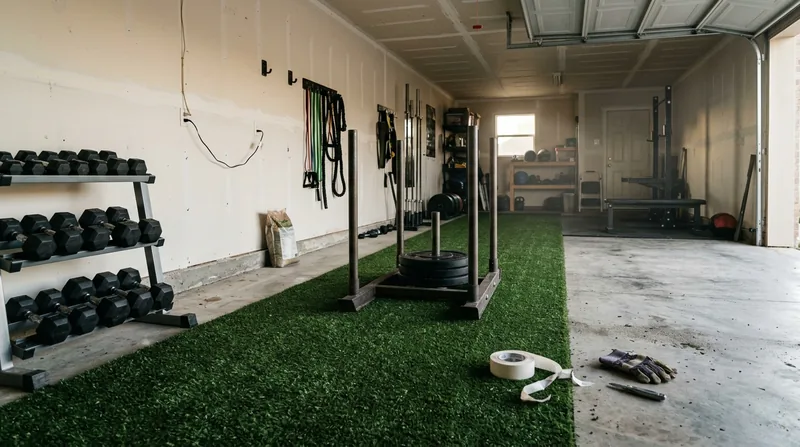




Sports, Gym & Court Turf in College Station means installing durable synthetic playing surfaces where Texas heat, humidity and heavy use demand materials that real grass cannot survive. Around the Brazos Valley, from the Northgate student housing corridor to the master-planned subdivisions toward Wellborn Road, homeowners, property managers and school districts face the same climate reality: Bermuda and zoysia lawns thin under post oak shade, scorch in August heat near 100 degrees, and struggle to recover after spring thunderstorms that leave yards standing in water for days. A properly installed synthetic turf field, batting cage or gym floor stays playable year-round, handles foot traffic that would destroy natural sod in weeks, and requires no mowing, fertilizer or irrigation. Since 2013, we have installed artificial turf systems on residential courts, commercial athletic facilities and school playgrounds across College Station, Bryan and the surrounding Brazos Valley communities, specifying turf by face weight, pile height and infill so every installation performs as promised.
Why Sports and Athletic Turf Installation Matters in the College Station Area
College Station summers push turf to its limits. When a residential court, gym floor or batting cage sits in direct sun, the surface temperature can exceed 140 degrees Fahrenheit, and the turf itself must be rated for that thermal stress. Real grass dies. Poorly specified synthetic turf becomes slippery, loses color, or develops seams that separate under expansion and contraction. The right turf, installed with proper base preparation and infill, stays firm underfoot, drains quickly after rain, resists UV degradation, and handles the foot traffic patterns that come with daily use, whether that is a child shooting baskets or a homeowner practicing golf swings.
- We select turf products rated for athletic and high-traffic use, with face weights and pile heights that match the sport or activity.
- We prepare the base with proper grading and drainage so water does not pool under the turf, a common cause of seam failure and premature wear in the Brazos Valley's clay-heavy soil.
- We specify infill type and pounds per square foot in writing, because infill affects traction, ball roll, temperature and durability on court surfaces.
- We install seams so they stay sealed under thermal expansion and foot traffic, critical on a batting cage or tennis court where movement is constant.
Proper athletic turf installation is not a generic lawn project. It requires understanding of play patterns, load zones, drainage requirements and the specific turf product's thermal and mechanical limits.
Key info: Texas A&M athletic facilities and the Bryan Independent School District have installed synthetic turf on multiple fields and practice areas to handle year-round use in the Brazos Valley heat. We follow the same durability and drainage standards for residential courts and home gym installations.
For permitting and site-specific rules, refer to the City of College Station development services if your court or gym project involves grading that changes drainage patterns or sits in a right-of-way.
How We Install Sports, Gym and Court Turf in College Station
Athletic turf installation begins with site assessment and drainage planning. We inspect the existing grade, identify water flow and any low spots that collect standing water, and determine whether base preparation requires excavation, compaction or the installation of a sub-surface drainage system. On sites with clay-heavy soil (common in College Station), we often install a permeable base layer and perimeter drainage to prevent the water pooling that degrades seams and infill. Once the base is firm and drains correctly, we roll out the turf, cut it to fit the court or field boundary, and seal seams with adhesive and heat-welded tape. Infill is then spread evenly, brushed into the pile, and compacted to the specification we provide in writing.
- We conduct a free site visit to assess drainage, measure the area, and understand how the court or gym will be used.
- We request a Texas 811 utility locate if excavation is needed for base prep, so we do not strike irrigation lines, low-voltage lighting or pet-fence wires.
- We grade and compact the base, install drainage if required, and create a firm, level foundation that will not settle under foot traffic.
- We unroll the turf, fit it to the boundaries of the court or field, and seal all seams with heat-welded tape and adhesive rated for athletic surfaces.
- We spread and compact infill to the face weight and pounds per square foot specified in the installation contract, ensuring even traction and ball roll.
The entire process, from base prep to finish, typically takes 3 to 7 days depending on the size of the court and whether drainage work is required. We provide a written spec sheet naming the turf product, face weight, pile height, infill type and base depth before we start.
Example: A 600-square-foot residential tennis court in College Hills requires a 2-inch base of compacted stone, a 75-ounce face weight turf rated for court play, and silica sand infill at 12 to 14 pounds per square foot. Total installation time is typically 4 to 5 days. See our pricing page for cost guidance on courts and athletic surfaces.
Sports, Gym and Court Turf Installation Methods
| Approach | Description | Best for |
|---|---|---|
| Permeable base with drainage | Excavate 4 to 6 inches, install 2 to 3 inches of compacted stone base, lay permeable landscape fabric, add perimeter drainage if needed, then turf and infill. | Courts and fields on clay soil or in low-lying areas where water pools after rain. |
| Compact stone base only | Grade the existing site, compact 2 to 3 inches of stone base, lay turf and infill on top. | Well-draining sites or existing concrete pads where drainage is not a concern. |
| Concrete or paver sub-base | Install a perforated underlayment over existing concrete or pavers, then turf and infill, allowing water to drain through to the base. | Residential patios, pool decks or gyms where a hard surface is already in place. |
| Seam and infill specification | Heat-welded seam tape and adhesive, plus silica sand or performance infill at pounds per square foot specified in writing for the court type and use. | All athletic courts and high-traffic surfaces where durability and consistent performance are critical. |
Sports, Gym and Court Turf Cost in College Station: What to Expect
The cost of a sports, gym or court turf installation depends on the size of the surface, the complexity of base preparation, drainage requirements, and the turf product and infill you choose. Most residential courts and gym floors in the College Station area start at $8 to $12 per square foot installed, including base prep, turf, seams and infill. A 600-square-foot residential tennis court typically costs between $4,800 and $7,200. A larger 1,200-square-foot practice court or gym floor runs $9,600 to $14,400. If the site requires significant drainage work, excavation or difficult access, the cost moves higher. We always measure on site and provide a written estimate before we commit to a price.
The largest cost drivers are:
- Base preparation, especially if clay soil requires excavation and drainage installation to prevent water pooling.
- Turf product choice: higher face weight and performance-rated turf for courts costs more than standard residential turf.
- Infill type: silica sand is less expensive than performance infills like zeolite or cooling agents, but performance infills add cost.
- Site access: tight spaces between fences or buildings, or sites with limited entry for equipment, add labor and time.
Getting 2 to 3 written estimates is smart. Each should name the turf product, face weight, pile height, infill type and pounds per square foot, base depth and compaction method, and seam specification. Avoid any estimate that does not include these details in writing. For detailed pricing across all court and gym turf sizes, see our pricing page.
Sports, Gym and Court Turf Near Me: What College Station Homeowners Should Know When Hiring a Turf Installer
Hiring the right turf installation company is the difference between a court that plays well for 10 years and one that fails in 2. A reputable installer should be fully insured with general liability and workers' compensation coverage, provide a certificate of insurance on request, offer a written spec sheet before the work begins, and give you references and photos of completed courts and gym installations. Ask to speak with past clients in College Station or Bryan who have had sports turf installed, and visit those sites if possible. Check that the installer understands drainage and base preparation specific to your site, not just rolling turf over bare dirt. If your court sits in an HOA community, confirm that the HOA approves synthetic turf for the area and understand any color, pile height or edging restrictions before you commit. Call us at (979) 814-4662 for a free estimate and site assessment, and we will answer every question about drainage, turf choice and durability before you decide.
The key questions to ask any turf installer near College Station are:
- Will you provide a written specification naming the turf product, face weight, pile height, infill type and base depth before we start?
- How do you handle drainage on clay soil, and what base preparation do you recommend for this site?
- Can you provide references from other residential or commercial courts you have installed in the Brazos Valley?
- What is your warranty on seams and the installation workmanship, and for how long?
- Do you handle seam repair and infill maintenance after the installation is complete?
A professional turf installer will answer each of these directly and explain why drainage and base prep matter on your specific site. Contact us at college-station-turf-installation.com/contact to discuss your court or gym project with someone who knows the College Station climate and soil.
Sports, Gym & Court Turf in College Station: Pricing Guide
| Service | Price | Details |
|---|---|---|
| Residential tennis or sports court (400-800 sq ft) | Starting at $8/sq ft | Base prep, heat-welded seams, silica sand infill, and turf rated for court play included |
| Larger courts or gym floors (800-1,500 sq ft) | Starting at $10/sq ft | More complex drainage, performance infill, and specialized base compaction for high-traffic athletic use |
| Drainage and base prep on clay soil | On estimate | Excavation, perimeter drainage, and compacted stone base add cost depending on site conditions |
| Performance infill (cooling, zeolite) | Add $1-2/sq ft | Upgrades from silica sand to performance infills for thermal management or durability in high-use areas |
| Travel and estimate | Free and included | No mileage fee for College Station and surrounding Brazos Valley service areas; free on-site estimate within 24 hours |
Indicative pricing, the exact cost depends on square footage, finish, and site access. Free personalized estimate within 24h at (979) 814-4662.


