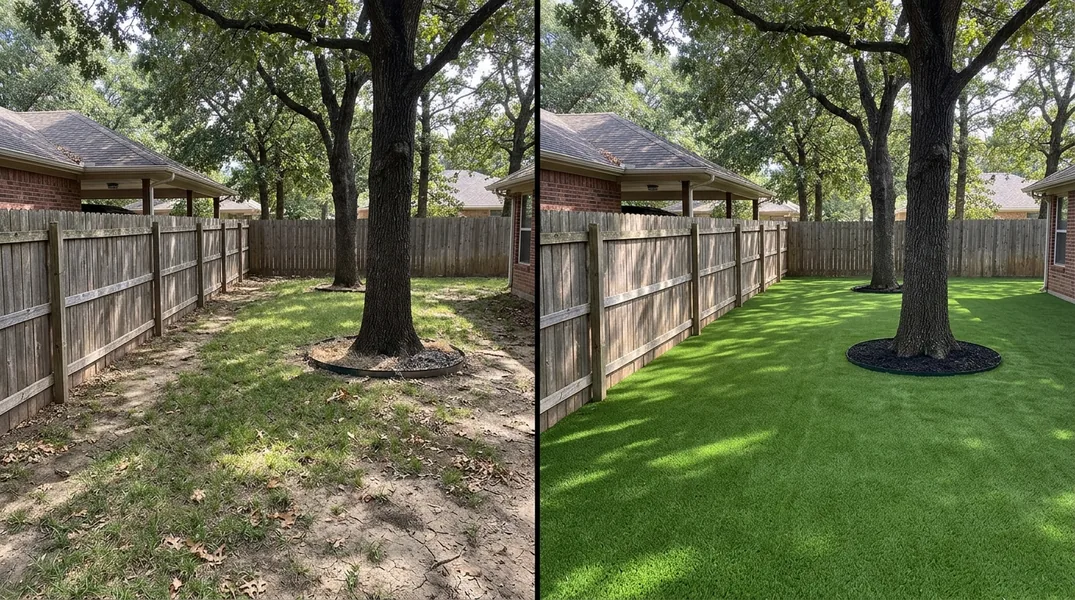
Why Clay Soil in College Station Demands Special Artificial Grass Preparation
If you own a home in College Station, you already know that Brazos Valley clay is no joke. This heavy, dense soil holds water like a sponge and drains slowly, which creates a perfect storm of problems for traditional lawns and, if installed incorrectly, for artificial grass as well. Many homeowners assume that artificial turf is simply rolled out over existing soil, but the reality is far more nuanced, especially in clay-heavy regions.
The challenge with clay is that it compacts easily and resists water penetration. When rain falls or irrigation water is applied, it sits on the surface rather than moving through the soil profile. Over time, this standing water can damage the backing of artificial grass, promote mold and mildew growth, and create soft spots that feel spongy underfoot. This is why proper turf base prep is absolutely critical before any Residential Artificial Grass Installation takes place in College Station. Without it, even premium artificial grass will fail prematurely, leaving you frustrated and out of pocket.
Understanding Artificial Grass Drainage: The Foundation of Success
Artificial grass drainage is not just about the turf itself, it is about creating a complete system that moves water away from the installation zone. Think of it like a multi-layer sandwich where each component plays a vital role. The top layer is the artificial grass, which is typically permeable and allows water to pass through. Beneath that sits a shock pad or cushioning layer, and then comes the critical base material. All of these layers must work together to channel water downward and away from your yard.
In College Station, where clay dominates the landscape, drainage design must account for the soil's natural resistance to water movement. If water cannot percolate through the clay below the artificial grass, it will pool on top of the base material and eventually seep back up into the turf backing. This moisture creates an environment where algae, mold, and fungal issues thrive. A well-designed drainage system prevents this by ensuring that water moves laterally across the base material and is directed toward drainage outlets or permeable edges, where it can escape into surrounding soil or be channeled away via French drains or slope.
What to Put Under Artificial Grass: Choosing the Right Base Materials
The question of what to put under artificial grass is one of the most important decisions in the installation process. On clay soil, you cannot simply compact the existing earth and call it done. Instead, you need to build a proper base that separates the artificial grass from the clay, provides structural support, and facilitates drainage. The industry standard involves multiple layers, each with a specific purpose.
The first step is to remove existing sod and loosen the compacted clay beneath it. This might seem counterintuitive, but breaking up the clay allows for better water movement and prevents the hard pan effect that makes drainage impossible. Next comes a layer of landscape fabric or geotextile, which acts as a barrier between the clay and the aggregate above. This fabric prevents clay particles from migrating up into the base material and clogging it over time.
Above the geotextile, most professional installers place crushed limestone, recycled asphalt, or engineered stone dust. These materials are angular, compact well, and allow water to flow through them. In College Station, crushed limestone is particularly popular because it is locally available and provides excellent drainage while adding stability to the base. The depth of this aggregate layer typically ranges from two to four inches, depending on the specific soil conditions and the intended use of the yard. For areas that will see heavy foot traffic or pet activity, a thicker, more robust base is warranted.
Turf Base Prep in College Station: Step-by-Step Installation Process
Proper turf base prep begins with a thorough site assessment. Before any digging or material placement occurs, a professional installer evaluates the existing grade, identifies low spots where water naturally collects, and plans for adequate slope. In College Station, the goal is to create a slight slope of approximately one percent, which encourages water to move laterally rather than pool. This slope is subtle enough that it is invisible to the eye but effective at managing water flow.
Once the slope is established, the existing vegetation and topsoil are removed to expose the clay subgrade. At this point, the clay is broken up using a tiller or similar equipment, which improves its ability to accept water from above. Then the geotextile barrier is laid down, overlapping seams by at least six inches to prevent any gaps. This fabric is secured with landscape pins or staples to keep it in place during the next phase.
The aggregate base material is then spread evenly across the geotextile and compacted in layers using a plate compactor or similar tool. Compacting in multiple thin layers, rather than dumping everything at once and compacting once, ensures a more uniform and stable base. Finally, a shock pad or cushioning layer is installed on top of the aggregate, followed by the artificial grass itself. Throughout this process, drainage is verified by running water across the surface and confirming that it does not pool or stand.
Common Mistakes That Compromise Artificial Grass Drainage on Clay
Many homeowners and even some installers make critical errors when preparing clay soil for artificial grass, and these mistakes often lead to premature failure. One of the most common mistakes is failing to address the clay itself. Simply laying landscape fabric directly on compacted clay and then adding aggregate creates a false sense of security. Water will still struggle to penetrate the clay, and the system will eventually fail as moisture accumulates.
Another frequent error is using the wrong type of base material. Some installers use fine sand or clay-based materials, which actually compact and clog over time, worsening drainage rather than improving it. In College Station, only angular, well-draining aggregates like crushed limestone or recycled asphalt should be used. Additionally, many people underestimate the importance of slope. A completely flat yard might look level to the naked eye, but without proper grading, water will find low spots and pool there.
Inadequate base depth is yet another pitfall. Skimping on the thickness of the aggregate layer to save money almost always results in problems down the road. The base needs to be thick enough to provide proper support and drainage capacity. If you are considering artificial grass installation for Pet Turf & Dog Run Installation or any other application, invest in proper base prep from the start. It is far less expensive than replacing a failed installation later.
How Long Does a Properly Prepared Artificial Grass Installation Last?
When artificial grass is installed correctly on properly prepared clay soil in College Station, homeowners can expect it to last 15 to 20 years or more. The durability depends on several factors, including the quality of the turf itself, the intensity of use, and ongoing maintenance. However, the foundation of longevity is always the base preparation and drainage system. A mediocre turf installed over an excellent base will outperform premium turf installed over a poor base every single time.
Regular maintenance extends the lifespan even further. Periodic brushing to restore the pile, occasional infill top-ups, and keeping the surface clean all contribute to a longer life. However, none of these maintenance tasks can overcome a faulty drainage system. If water is pooling or the base is settling unevenly, even the best maintenance routine cannot save the installation. This is why getting the base prep right the first time is not just important, it is essential.
Ready to Install Artificial Grass on Your College Station Property?
If you are ready to transform your yard with artificial grass that will last for decades, College Station Turf Installation is here to help. Our team understands the unique challenges posed by Brazos Valley clay soil, and we have the expertise to prepare your property correctly. Whether you are interested in Residential Artificial Grass Installation, Pool Surround Turf, or any other application, we begin with meticulous site preparation and drainage planning.
Do not leave your artificial grass investment to chance. Contact College Station Turf Installation today for a free estimate and learn how we can create a drainage system and base prep that will keep your turf looking beautiful for years to come. Call us at (979) 814-4662 to discuss your project, or visit our website at https://college-station-turf-installation.com to learn more about our services and see examples of our work throughout the community.
Looking for a professional artificial grass installation company in College Station? College Station Turf Installation responds fast for all your artificial grass installation needs.
Get a Free Quote